Tuesday 13 July 2004
Kiwis provide stability in remote region
Story and photos by Sgt. Frank Magni, 17th Public Affairs Detachment, US Army
ROMERO DISTRICT, Afghanistan –– Nestled in the northern province of Bamian, U.S. forces are a rare sight. But that doesn’t mean reconstruction isn’t taking place.
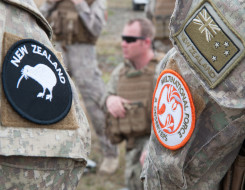
Members of the New Zealand armed forces have taken on the task with great success, despite all the challenges posed by the area.
Located at least seven hours (by truck) from the Bamian Provincial Reconstruction Team site, Forward Operating Base Romero is one of two forward sites the Kiwis operate from in the Bamian province.
Facilitating reconstruction and maintaining a Coalition presence in the area is the primary mission of the Kiwis, but many of the lessons they learned from the PRT site don’t apply to Romero because of a simple difference in culture.
“Unlike our counterparts in Bamian, we are dealing with the Tajik tribe,” said New Zealand Navy Lt. Cam Gordon, FOB Romero second in charge. “The Hazaras are the predominate group in the south.”
Gordon said the difference in tribes forces his troops to alter their approach to the people. “They have different mannerisms and temperaments. They have different cultural sensitivities,” he said.
While adjusting their approach, the theme remains the same as everywhere else in the Coalition – providing a secure environment for reconstruction to take place.
The Kiwis provide security with presence patrols over some very unpredictable roads. With a combination run-off from mountain snow and flooding from nearby streams, a route the teams take one day might not be available the next.
“Once you think you have a handle on the road conditions, another problem will spark up somewhere else,” said New Zealand Army Lt. Matt Ottaway. “The roads and bridges are very unpredictable.”
Aware that the roads are a constant challenge, the Kiwis at the FOB maintain a supply of essential items on the base – staying prepared for potential isolation from the PRT due to road washouts.
Right now the forces at Romero are focused on the same issues the rest of the Coalition is tuned in to. Voter registration, school building and providing medical care, as well as stabilizing the region so that other non-governmental organizations can come to assist in reconstruction, are just some of the issues the small group deals with.
New Zealand Army Maj. Tausia Tarsau, FOB Romero commander, said he has seen progress in the short time he has commanded in the area.
Tarsau said there is tremendous potential for the growth of the local government and infrastructure. “In the four months I’ve been here I’ve seen real progress.”
He said the progress he has seen comes from the local population’s eagerness to improve their country.
“After so many years of war they have been waiting a long time for things to improve,” said Tarsau. “One of our biggest challenges is just convincing them that their suffering is over and our Coalition is here to provide a secure environment where they are safe from persecution, harassment and wrongful punishment.
“In a sense they have been convinced that we are here to help,” he said. “I feel we have moved to a stage where I’m comfortable with our progress and feel we have been successful.”
Success for the Kiwis in Romero comes as no surprise to Tarsau. He said the members of his military were prepared for the mission in Afghanistan because of the many rotations the New Zealand military has made in East Timor.
“The mission here is along the same lines as East Timor in terms of helping to rebuild the government,” he said.
With two rotations through East Timor under his belt, New Zealand Cpl. Ray Davis, FOB Romero team leader, said he has used skills he gained in East Timor, but found Afghanistan to be more challenging because of the conditions.
Tarsau said even with all the challenges, “When you measure that against the satisfaction of providing a peaceful environment, you find this mission to be incredibly rewarding.”
Ottaway said not only is the mission in Romero rewarding for him, but being a part of the Coalition has been the highlight of his time in Afghanistan.
“The Coalition members I’ve worked with here have been brilliant,” he said. “It is nice to come and fit in with such a large organization.”
Although small FOBs like Romero are common to the mission of Combined Joint Task Force-76, the Kiwis in Romero are adapting like the rest of the Coalition – creating another area where Afghanistan can move toward its ultimate goal of becoming autonomous.
Photo Caption: New Zealand Army Pte. Dan Gregory, Bamian PRT, guards the perimeter of the Ghandakia village during the CMA June 16.
This page was last reviewed 29 September, 2011 and is current.