BREAKING MEDALS NEWS
Quick Links:
- 2012 News Items:
- 23 April 2012 - Wearing medals with pride on Anzac Day
- 2 April 2012 - NZSAS soldier’s bravery to be recognised posthumously
- 2 April 2012 - Memorial Crosses presented to slain soldiers' families
- 16 March 2012 - Over 24,800 NZDSMs issued
- 12 March 2012 - Update on NZDSM for current serving military personnel
- 9 March 2012 - Update on the South-East Asia 1950-2011 Review
- 10 January 2012 - New Year Honours awarded to five NZDF personnel
- 2011 News Items:
- 21 December 2011 - Over 18,000 NZDSMs issued
- 6 December 2011 - Gallantry awards richly deserved by NZ soldiers
- 15 November 2011 - New Zealand Defence Force personnel receive United States medals
- 18 October 2011 - New medal now available for those fifty and over
- 1 October 2011 - Defence Force personnel receive awards for gallantry
- 2 September 2011 - Chief of Army comments on theft of medals from the Army Museum
- 17 August 2011 - Sixty year olds can now apply for new medal
- 25 July 2011 - Wellington Naval Reservists service in Sudan and Solomons recognised in medal awards
- 12 July 2011 - Consultation begins on medals for military service in South-East Asia 1950 to 2011
- 4 June 2011 - Defence personnel named in Queen's Birthday Honours
- 3 June 2011 - Update on the Review of Long Service Awards
- 26 May 2011 - Heroic Regiment receives Korean citation
- 25 May 2011 - Update - NZ Defence Service Medal
- NZDSM Royal Warrant (pdf 80kb)
- NZDSM Regulations (pdf 102kb)
- 3 May 2011 - Applications flood in for NZ Defence Service Medal
- 15 April 2011 - Applications open for New NZ Defence Service Medal
- 8 April 2011 - First of new Defence medals to be presented on 14 April
- 5 April 2011 - Latest information on the NZDSM medal project
- 2 April 2011 - Minister of Defence: Congratulations on well-deserved bravery awards
- 2 April 2011 - Police recipients of bravery award congratulated
- 15 February 2011 - “Bamiyan Babies” Nurse coordinator honoured in New Years list
- 7 February 2011 - Latest information on the NZDSM medal project
- 5 January 2011 - New Year Honours for NZDF personnel
- ---
- Material related to the NZ Defence Service Medal:
- Applying for the NZDSM online (by ex-Service persons)
- Paper application forms for the NZDSM (for ex-Service persons)
- NZ Defence Service Medal Frequently Asked Questions and latest updates
- Information for current serving NZDF military personnel
- ---
- Link to Archived medals news 1999 to 2010
2012 News Items
Wearing medals with pride on Anzac Day
23 April 2012
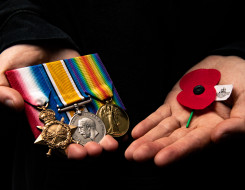
The New Zealand Defence Force is pleased that so many members of the public will join them wearing medals on Anzac Day and have provided some guidance about how medals can be worn with pride.
The rules governing medal wearing in New Zealand known as the Order of Wear specifically allows family members to wear medals of the deceased on the right side for national days of memorial like Anzac Day and Remembrance Day (11 November) and other notable events.
The Chief of Defence Force Lieutenant General Rhys Jones says: "I am delighted to observe a large number of people wearing their relative’s medals to Anzac Day services. By doing so they are reinforcing their relative’s mana and honouring their memory by wearing these medals ‘on parade with their mates’ again. We encourage this practice within the dress conventions agreed to.
"Serving members of the NZ Defence Force are also allowed to wear their deceased relatives medals while in uniform on this day, under the same convention."
Conventions for wearing a relative’s medals include:
• People should only wear one set of medals and they should be directly related to their family, for example, should have belonged to a brother or sister, dad or mum, grandfather or grandmother.
• In all cases these are worn on the right chest.
• Only service medals and decorations mounted on a medal bar (full-size or miniature) can be worn by a relative. It is perfectly acceptable for people to wear miniature medals mounted on a medal bar as the weight is far easier to handle.
• Royal Honours insignia such as neck badges, sashes, sash badges, or breast stars cannot be worn by anyone other than the original recipient. The same rule applies to any Unit and Personal Commendations that the deceased wore on their right chest.
•The occasions on which wearing of relatives medals is permitted are confined to Anzac Day (25 April) and Remembrance Day (11 November). In addition, it may be appropriate for next-of-kin and other relatives to wear relative's medals on an occasion where either the relative's service or the unit in which they served is being commemorated.
Lieutenant General Jones reminds ex-Service people that their medals should be mounted and worn in exactly the same manner as if they were in uniform, on the left chest.
"Anzac Day is a day in which as a country we commemorate the efforts of ordinary New Zealanders in the service of their country. The wearing of medals is a tradition that links our past, with those serving today."
Further information:
For more information see the Wearing medals page of our website.
NZSAS soldier’s bravery to be recognised posthumously
2 April 2012
During the presentation of the NZ Memorial Cross to the family of Lance Corporal Leon Smith, the Prime Minister today announced that he would also become the latest recipient of the Charles Upham Award for Bravery.
The award is made to the person who has risked their life to undertake an outstanding act of heroism during the previous two calendar years, as determined by the Charles Upham Trust Committee.
Nominations are called for each year from organisations such as the NZ Defence Force, NZ Police, NZ Fire Service, Civil Defence and the Surf Life Saving Association in addition to the public.
On 19 August 2011, Lance Corporal Smith was part of a NZSAS Task Force that responded to an insurgent attack on the British Council Office in Kabul, Afghanistan. Also present was Corporal Doug Grant, who was tragically killed during the incident.
During the response, Lance Corporal Smith had exposed himself to insurgent fire in order to confirm Corporal Grant’s location after he had been mortally wounded. He then ran across exposed and open ground in order to reach Corporal Grants location, and immediately started applying first aid until he could be evacuated.
The announcement means that LCpl Smith will become the 24th recipient of the Charles Upham Award for Bravery when it is presented by the Governor General at a time and place yet to be determined. He will also become the fourth member of the NZ Defence Force to receive the award.
Background Information
Lance Corporal Leon Smith enlisted into the New Zealand Army on 23 August 2005 and completed NZSAS Selection in 2006 and the NZSAS Basic Cycle of Training in 2007. He had previously served in Afghanistan with the NZSAS over the period January - October 2010 and started his second Tour of Duty in August 2011. He was killed in action on 28 September 2011.
The Charles Upham Award for Bravery
The Charles Upham Award for Bravery stems from public recognition of the gallantry of Captain Charles Upham, VC and Bar. Shortly after World War 2, money which was originally raised by the people of Canterbury to purchase a farm for Captain Upham was declined by him and at his suggestion was used to fund scholarships for returned servicemen or their sons or daughters at the University of Canterbury or Lincoln College. The purpose of the original scholarship ran its natural course and in 1976 the Bravery Award was initiated. The Charles Upham Award for Bravery is made annually to the person, who, in the opinion of the Trust Committee, has, at risk to his or her own life, performed the most outstanding act of heroism during the previous two calendar years.
Previous Recipients of the Charles Upham Award for Bravery
1981 Sgt Peter Stanley Burton, RNZAF
1982 Const Mark Gregory Davidson, NZ Police
1983 No award made
1984 Able Seaman David Daniel Douglas, RNZN
1985 Const Stephan Anthony Linney, NZ Police
1986 Mr James Anthony Gilligan, Civilian
1987 Mr Stephan Ralph John Ching, Civilian
1988 Mr Graeme John Finn, Civilian
1989 Sgt John Akurangi, NZ Army
1990 No award made
1991 Mr Joseph Boyd Goodwin, NZ Fire Service
1992 Mr Ate Heineman, Civilian
1993 Miss Jacinda Amey, Civilian
1994 Mrs Evelyn Winslade, Civilian
1995 Const Massey Vaughan Coffin, NZ Police
1996 Sgt Christopher Anthony Maude, NZ Police
1997 No award made
1998 Mr Craig Smart, Civilian
1999 Mr Maurice Knowles, Civilian
2000 Mr David Gibson, NZ Fire Service
2001 No award made
2002 Ms Stacey Watson, Civilian
2003 Mr John William Hare, Civilian
2004 Mr Robert John Van Hale, Civilian
2005 Mr Jamie Fisher, Civilian
2006 Senior Sgt Alister Dickie, NZ Police
2007 No award made
2008 No award made
2009 Const James Muir, NZ Police
Related media statement:
2 April 2012 - Memorial Crosses presented to slain soldiers' families
![]()
Memorial Crosses presented to slain soldiers' families
2 April 2012
The families of two NZSAS soldiers tragically killed in Afghanistan last year were presented with the New Zealand Memorial Cross by Prime Minister John Key today.
Family members of both Corporal Doug Grant and Lance Corporal Leon Smith attended a closed ceremony in Papakura Military Camp, which was also attended by senior members of the NZDF and colleagues from the NZSAS Regiment.
The New Zealand Memorial Cross is presented to family members of New Zealand Service personnel who lose their lives during, or as a result of, operational service outside New Zealand.
Chief of Defence Force Lieutenant General Rhys Jones said the medal recognises that it is not only the soldiers themselves that make sacrifices in the service of New Zealand, but also their families.
"Both Corporal Grant and Lance Corporal Smith died in the service of their country, and in doing so they made the ultimate sacrifice. Today those sacrifices, along with the impact that these tragic events have had on their families, is remembered".
CPL Grant was shot by insurgents while attempting to free captives held in the British Council offices in Kabul on 19 August 2011. He died from his injuries en route to hospital.
LCPL Smith was killed on 28 September 2011 after being struck by a bullet fired by an insurgent while securing a compound during a partnered operation with the Afghan Crisis Response Unit.
The families of both Corporal Grant and Lance Corporal Smith do not wish to make any comment at this time.
Related media statement:
2 April 2012 - NZSAS soldier’s bravery to be recognised posthumously
Over 24,800 NZDSMs issued
16 March 2012
Since April 2011 more than 24,800 New Zealand Defence Service Medals (NZDSM) have been issued. Between April 2011 and December 2011 more than 18,000 NZDSMs were distributed, as discussed in detail in our 21 December 2011 update.
Between 1 January 2012 and mid-March 2012 more than 6,800 NZDSMs have been issued. Over 5,500 have been sent to ex-Service persons and more than 1,250 to current NZDF military personnel. Of the ex-Service persons, over 1,980 have been issued with the CMT clasp, over 480 with the National Service clasp, more than 2,250 with the Regular Force clasp, and over 500 issued the Territorial clasp for Territorial / Reserve service. In addition, over 300 ex-Service persons have been issued the NZDSM with two clasps because they completed the service requirements for two or more clasps, e.g. three years in the Regular Force and three efficient years in the Territorial / Reserve Forces. Seven ex-service persons have been awarded three clasps.
NZDF is currently accepting applications for the NZDSM from ex-Service persons age 50 or over.
It is expected that applications will be opened to all applicants in early May 2012. Further information will be posted on this website in about early May.
Applying for the NZDSM online. Just click on the How to Apply Online button above.
For further information see the NZ Defence Service Medal Frequently Asked Questions and latest updates page of our website.
![]()
Update on NZDSM for current serving military personnel
12 March 2012
Current serving military personnel in the NZDF (both regular and reserve) are asked not to contact the HRSC or NZDF Medals Office about their New Zealand Defence Service Medals (NZDSM). The medals will be issued by the Medals Office in the approximate order of when personnel joined the NZDF, with the longest serving personnel receiving the medal first.
Members of the NZDF being released
Eligible members of the NZDF who were serving as at 14 April 2011, and are currently under release action, will only be issued with their NZDSM out of sequence in exceptional circumstances. Please refer to the Military Admin & Pay intranet site for further information.
When will I receive the NZDSM?
If you enlisted during the 1990s, these medals should be dispatched no later than the end of March 2012.
If you enlisted during January 2000 to January 2010, Army personnel should expect to receive their medals no later than the end of May 2012. Navy and Air Force personnel should expect to receive their medals no later than the end of July 2012.
How do I wear the NZDSM?
Current serving military personnel are not to wear the ribbon for the NZDSM until the NZDSM has been officially presented to them.
Wearing of the NZDSM medal which has not been remounted
Current military personnel can only wear the NZDSM without remounting if the medal is their first or second medal. If the NZDSM is the member’s second medal, then temporary permission to wear un-remounted medals may be agreed to by the member’s unit command, as long as the medals looks neat and tidy. Medals that are not neat and tidy (or worn in the wrong sequence) bring the NZDF into disrepute.
Exception: If the NZDSM is to be worn at a parade, e.g. ANZAC Day, it must be mounted.
NZDSM Medal Remounting & Further Information
The Military Admin and Pay intranet site provides full details about the NZDSM remounting process, including what you need to do and the process that must be followed.
Information for ex-Service persons
NZDF is currently accepting applications for the NZDSM from ex-Service persons age 50 or over.
It is expected that applications will be opened to all applicants in early May 2012. Further information will be posted on this website in about early May.
Applying for the NZDSM online. Just click on the How to Apply Online button above.
![]()
Update on the South-East Asia 1950-2011 Review
9 March 2012
The Medallic Recognition Joint Working Group received 68 submissions on service in South-East Asia. After considering the submissions, the Joint Working Group submitted an interim report to the Minister of Defence in November 2011.
The Joint Working Group is currently undertaking further archival research and will then finalise its report and recommendations. The Joint Working Group expects to present its final report to the Government by 1 May 2012.
The Government's decisions on the recommendations from the Joint Working Group will be widely publicised, including in the RSA Review and on the Breaking News page of the NZDF Medals website.
For further information see the South-East Asia review page of our website.
Related media statement:
12 July 2011 - Consultation begins on medals for military service in South-East Asia 1950 to 2011
![]()
New Year Honours awarded to five NZDF personnel
10 January 2012
Five New Zealand Defence Force personnel were among the New Zealanders named in this year’s New Year Honours.
Chief of Navy Rear Admiral Tony Parr, has been made an Officer of the New Zealand Order of Merit (ONZM). Since his appointment as Chief of Navy in May 2009, Rear Admiral Parr has overseen the successful introduction into service of the new ships of Project Protector Fleet. Over his 32 year naval career, he has held a range of staff and command appointments at sea and ashore and has consistently performed in a superior and exemplary manner providing leadership and direction.
The New Zealand Distinguished Service Decoration (DSD) has been awarded to four NZDF personnel.
Colonel John Boswell deployed to Afghanistan in April 2010 as the Commanding Officer of the New Zealand Provincial Reconstruction Team (NZPRT) in Bamyan. He initiated the development of a strategic plan to transition from a military-led operation to a civilian-led and finally Afghan managed operation. The first stage of the transition occurred in June 2010, when leadership of the NZPRT passed to the Ministry of Foreign Affairs and Trade with the appointment of a civilian director, without disruption to ongoing operations.
Squadron Leader Keith Bartlett was posted to the Orion P-3 Systems Upgrade Project in Greenville Texas in 2008. At the time of the posting, he had no time to qualify as an Orion Qualified Flight Instructor. His deployment was continually extended due to unforeseen aircraft flight performance issues. These challenges required flight testing well beyond the scope, complexity and duration of the original flight test programme.
With no formal training and minimal preparation, he was also required to develop and verify flight deck instrumentation and automation procedures, train the flight deck crew and manage systems engineers and operators conducting mission systems integration testing onboard the modified P-3K2 aircraft. These were development testing events that a senior Qualified Flight Instructor would be unlikely to encounter during the entire span of a career. SQNLDR Bartlett’s contribution was instrumental to the successful completion of the P-3K2 aircraft project.
Lieutenant Commander Simon Griffiths is the Commanding Officer of the Navy’s Offshore Patrol Vessel HMNZS Wellington. He led the ship through the introduction into service trials and unit readiness evaluation. The successful conclusion was the ship’s operational deployment in February 2011 to the Southern Ocean and Antarctica. This was the first Navy visit to the area in 40 years and while there is much historical information on operations in the area, there was neither practical experience operating a vessel like the HMNZS Wellington nor current knowledge of ice navigation.
While the ship was departing the Ross Sea, a distress signal was received from a recreational adventure vessel. With limited communications back to New Zealand due to bad weather conditions, he instituted a considered and measured approach to the call. The ship spent 12 hours conducting an extensive, but what provided to be unsuccessful, search for the yacht or her life boat and crew.
Squadron Leader Russell Kennedy has served in the RNZAF since January 1978, during which time his name has become synonymous with flight safety. He has held various roles as an aircraft investigator and as Air Force Safety Officer. He has led or assisted in over 25 aircraft accidents or incidents. His expertise is also recognised in the civilian flight safety sector and he has been call on to assist both the Civil Aviation Authority and the Transport Accident Investigation Commission on many occasions, most recently the crash of the Air New Zealand Airbus A320 off the coast of France. He is also Secretary of the Australia and New Zealand Society of Air Safety Investigators. SQNLDR Kennedy’s contributions to the safety of flights in Australia and New Zealand have benefited the aviation industry and the general public.
Note: The New Zealand Distinguished Service Decoration (DSD) recognises distinguished military service by regular, territorial and reserve members of the New Zealand Defence Force, including command and leadership and service in an operational environment, or in support of operations.
Related media statement:
5 January 2011 - New Year Honours for NZDF personnel
![]()
2011 News Items
Over 18,000 NZDSMs issued
21 December 2011
Since April 2011 more than 18,000 New Zealand Defence Service Medals (NZDSM) have been issued. Over 17,000 have been sent to ex-Service persons and more than 1,200 to current NZDF military personnel. Of the ex-Service persons, over 5,300 have been issued with the CMT clasp, over 1,300 with the National Service clasp, more than 7,900 with the Regular Force clasp, and over 1,100 issued the Territorial clasp for Territorial / Reserve service. In addition, over 1,500 ex-Service persons have been issued the NZDSM with more than one clasp because they completed the service requirements for two or more clasps, e.g. three years in the Regular Force and three efficient years in the Territorial / Reserve Forces.
NZDF is currently accepting applications for the NZDSM from ex-Service persons age 50 or over.
In November there have been locally organised presentations throughout New Zealand, including in Alexandra, Dunedin, Masterton, Napier, Takaka, Taradale, Waipawa and Wellington (Johnsonville). For the local media coverage of some of these events click on the links below (which go to the article on the relevant newspaper's website):
http://www.odt.co.nz/regions/central-otago/189251/military-medals-presented
http://www.odt.co.nz/news/dunedin/187454/services-welcome-escape-office
http://www.odt.co.nz/news/dunedin/187132/obligation-completed
Medals for ex-Service personnel are couriered by the Defence Force to the home address of the applicant. Ex-Service personnel who have received the NZDSM and would like the medal presented to them formally can contact their nearest RSA or ex-Service persons' organisation, as many RSAs and ex-Service persons' organisations are arranging presentations in local communities. The family, peers and friends of recipients are very welcome to attend these presentations.
Applying for the NZDSM online. Just click on the How to Apply Online button above.
For further information see the NZ Defence Service Medal Frequently Asked Questions and latest updates page of our website.
![]()
Gallantry awards richly deserved by NZ soldiers
6 December 2011
Gallantry awards being presented today highlight the courage and professionalism of New Zealand forces serving in Afghanistan, Defence Minister Wayne Mapp said today.
“The three New Zealand soldiers have shown the highest level of bravery in the face of danger,” said Dr Mapp.
The three men were in a vehicle patrol attacked by insurgents in Afghanistan in August 2010. Lieutenant Tim O’Donnell was killed in the attack.
“Corporal Albert Moore, Lance Corporal Allister Baker and Corporal Matthew Ball acted quickly and decisively to prevent any further loss of life.”
The New Zealand gallantry awards were introduced in 1999. There are four levels of award - the Victoria Cross for New Zealand, the New Zealand Gallantry Star, the New Zealand Gallantry Decoration, and the New Zealand Gallantry Medal.
“These are the highest honours for New Zealand service personnel,” said Dr Mapp. “All New Zealanders can be proud of these three soldiers.”
These four awards replaced some 20 British medals. The Gallantry Star – being awarded today to Corporal Albert Moore – replaced the Distinguished Service Order, the Distinguished Conduct Medal, and the Conspicuous Gallantry Medals (naval and flying).
The Gallantry Decoration – being awarded to Lance Corporal Allister Baker and Corporal Matthew Ball – replaced the Military Cross and the Military Medal for the Army, and similar level decorations for the other services.
Related media statement:
1 October 2011 - Defence Force personnel receive awards for gallantry
Further information:
Full information on these gallantry awards, including the citations, are on the 1 October 2011 Gallantry Awards pages of the NZ Army website.
![]()
New Zealand Defence Force personnel receive United States medals
15 November 2011

Caption: Major General Talleri (right) presents the Meritorious Service Medal to Group Captain Greg Elliott (left) who served as Commander of the NZPRT from April to October 2009.
NZDF Media release
The service of 25 New Zealand Defence Force personnel who have served in Afghanistan as part of Operation Enduring Freedom was recognised today in a special United States medal presentation in Wellington.
US Marine Corps Major General Peter Talleri presented a Bronze Star, nine Meritorious Service medals and 15 Army Commendation medals to 25 NZ Defence Force personnel.
At the presentation Major General Talleri said, “The accomplishments of your Defence Force in Bamyan Province, Afghanistan are quite impressive. I’ve had the opportunity to read some of your award citations that you will be presented with today and I am truly humbled by the selfless acts and sacrifices that you have accomplished.”
Among the recipients were 11 NZ Defence Force personnel who served with the New Zealand Provincial Reconstruction Team (NZPRT) in Bamyan Province, Afghanistan.
Group Captain Greg Elliott and Air Commodore Steve Moore who served as Commanders of the NZPRT in 2009 and 2006 respectively were both awarded the Meritorious Service Medal. Both men were recognised for their outstanding leadership, dedication, and the numerous accomplishments of their PRT teams.
Captain Stuart Beckman was awarded the Army Commendation Medal. His citation states that he demonstrated exceptional courage and bravery while conducting and supervising counter Improvised Explosive Device operations in a high threat environment under constant danger.
Among the recipients were also personnel who served as part of the National Support Element in Bagram, and personnel attached to the coalition training team for the Afghan National Army as well as NZ Policemen who are also Territorials, Major Grant Arrowsmith and Warrant Officer Colin Murphy, who were awarded the Army Commendation Medal for their work in Afghanistan in 2009.
Special permission had to be granted by the Governor-General for the defence personnel to wear the US medals on their uniform.
This is the second time US medals have been awarded to NZ Defence Force personnel since Vietnam. The first was in 2006 when US Ambassador William McCormick presented the United States Bronze Star Medal to ten NZ Defence Force personnel and the United States Army Commendation Medal to seven NZ Defence Force personnel at a ceremony held at the American Embassy.
Further US Award presentations will be made to 11 recipients who were not able to attend the presentation today who are either serving in Afghanistan, Timor Leste or at sea on duty.
The Bronze Star was instituted in 1944 and is awarded for the performance of heroic or meritorious acts. The United States Meritorious Service Medal was instituted in 1945 and is awarded for non-combat meritorious achievement or meritorious service. The United States Army Commendation Medal was instituted in 1945 and is awarded for acts of achievement or meritorious service. All the awards made to New Zealanders for service in Afghanistan are for meritorious service.

Captions: Left: United States Bronze Star (obverse view); Right: United States Army Commendation Medal (obverse view)
![]()
New medal now available for those fifty and over
18 October 2011
Ex-Service personnel aged 50 and over can now apply for the New Zealand Defence Service Medal (NZDSM).
Until recently the New Zealand Defence Force’s Medals Office was accepting applications for the NZDSM from ex-Service personnel aged 60 or over. Since April, when the first applications were called for, over 17,700 applications have been received by the Medals Office and over 13,000 medals have been issued.
Due to the large number of people eligible for the NZDSM, the call for applications is being managed in four stages, with priority given to processing applications from older living ex-Service personnel first.
The new medal means that a large number of personnel who served New Zealand loyally and well in a wide range of roles and contexts, but not on operations, are now receiving medallic recognition for their work.
“The medal recognises attested military service in the Defence Force by New Zealanders. Those who have served in the military for three years or more since the end of World War Two, and those who completed their compulsory military training or national military service obligations, qualify,” Assistant Chief of Personnel Commodore Kevin Keat said.
“Personnel with three years accumulated service, for example, between Regular, K Force, J Force and Territorial service (including RNZNR and RNZNVR) are also eligible for the medal.”
Ex-Service personnel are encouraged to apply for the medal using the online form on the NZDF Medals website.
Just click on the How to Apply Online button below.
Hard copies of the application form are also available through the website and at most local RSAs, which can provide staff to help ex-Service personnel fill in their applications if necessary.
CDRE Keat said, “We have set up a helpline for people with questions about the NZDSM, which is available during business hours. If you require assistance please call 0800 334 772.”
Ex-Service personnel who have received the NZDSM and would like the medal presented to them formally can contact their nearest RSA, as many RSAs are arranging presentations in local communities.
----
Applying for the NZDSM online. Just click on the How to Apply Online button above.
For further information see the NZ Defence Service Medal Frequently Asked Questions and latest updates page of our website.
Related media statements and upates:
17 August 2011 - Sixty year olds can now apply for new medal
15 April 2011 - Applications open for New NZ Defence Service Medal
![]()
Defence Force personnel receive awards for gallantry
1 October 2011
Today is a significant day for four NZ Defence Force personnel, who have been awarded Gallantry Awards for their courageous actions while deployed to Afghanistan.
Chief of Defence Force, Lieutenant General Rhys Jones says the decorations which rank among the highest decorations presented to NZ service men and women, acknowledge the courageous acts shown by these soldiers.
Corporal Albie Moore will be awarded the NZ Gallantry Star for gallantry shown in the IED contact resulting in the unfortunate death of LT Tim O’Donnell. Corporal Matt Ball and Lance Corporal Allister Baker will be awarded the NZ Gallantry Decoration for their actions during the same incident.
Chief of Defence Force, Lieutenant General Rhys Jones says "Our personnel are expected to operate in dangerous and volatile situations, and this incident was no exception. By extricating themselves from a complex attack and recovering vital equipment under fire, these men have demonstrated extreme courage in the face of a determined enemy".
"I am extremely proud of the manner in which they conducted themselves, not only during the contact, but also the way in which they have handled the intense scrutiny since returning to NZ".
Warrant Officer Denis Wanihi is to receive the NZ Gallantry Medal for his work in Afghanistan during 2010, where he was employed in a supervisory role dealing with and responding to Improved Explosive Devices (IED) and Explosive Ordnance Devices (EOD).
Warrant Officer Wanihi is currently deployed to Afghanistan and the Chief of Army, Major General Tim Keating acknowledged the commitment shown by WO2 Wanihi in returning to Afghanistan.
"The fact that Warrant Officer Wanihi has returned to a high threat environment is indicative of the levels of commitment that our soldiers and their families demonstrate, and I am proud that we have such individuals in our organisation".
"Much of the good work our soldiers do is because of the support they receive from their families and colleagues, and it is important that we recognise their efforts in providing that support".
The Gallantry Awards will be presented by the Governor General at a later date.
Further information
Full information on these gallantry awards, including the citations, are on the 1 October 2011 Gallantry Awards pages of the NZ Army website.
![]()
Chief of Army comments on theft of medals from the Army Museum
2 September 2011
Chief of Army Major General Tim Keating issued a video statement on the arrest of Keith Davies, commenting that the theft of medals from the museum strikes at the heart of Army's core values and is an affront to the New Zealand public.
A transcript of the video
Yesterday a former member of the Territorial Forces and staff member from the Army Museum was arrested and charged with offences relating to the theft of medals from the Army Museum.
I would personally like to thank the New Zealand Police Force for their tremendous efforts in bringing the case to this point. I will ensure that Army continues to support the endeavours of the Police as we close the case and ensure that we have learned lessons from this event.
The theft of the medals is deeply disturbing. The nature of this offence attacks our core values. We inherently trust our people and by extension the NZ public has trust in the New Zealand Army. The theft of these medals is also an affront to the history of New Zealand and the Army people that were involved in making that history. Every medal placed in trust to the museum is significant to the New Zealand community at large, the Army family and to the families of those recipients whose medals have been donated to the museum.
While I don't want to say anything that'll prejudice the case that is before the courts, what I want to make clear is that these events occurred nine years ago. New Zealanders will be upset by these events and rightfully should be so. But what they'll want to know from us is that we have put practises in place that address the issues that have occurred as a result of this arrest. I can assure the public that every measure possible has now been put in place by the staff off the museum and the Museum Trust Board that we are working closely with to ensure that this type of event does not occur in the future.
I have great faith in the museum staff team lead by Col (Rtd) Ray Seymour. They have been working tirelessly in the past few years where they have been running this museum to ensure that best practice, modern practises are in place to guard our treasures, our collection which is part of our army family history and part of the New Zealand heritage that we are safeguarding for the nation.
Background
On Wednesday 31 August, Keith Davies, former staff member at the Army Museum and 26-year Territorial Forces veteran was charged with the theft of medals from the museum, obtaining property by deception, false accounting and unlawfully exporting NZ antiquities.
Davies, a resident of Australia, was arrested upon his arrival back in New Zealand. He was remanded on bail and will appear in court on 22 September.
While the year-long police investigation was underway the NZ Defence Force could not inform families of what had occurred.
The Defence Force can now disclose that 395 medal sets comprising 843 individual medals were stolen from the museum between 1995 and 2002. The museum's entire collection of more than 500,000 items includes more than 11,000 medals.
Since the thefts occurred, a new team, led by Director Col (Rtd) Ray Seymour has been put in place. All possible measures have been taken since the discovery of the thefts to guard against it happening again and the Defence Force will continue to work with the Museum Trust Board on this matter.
As many of the stolen medals were donated to the museum over 20 years ago the recorded contact details are out of date; accordingly, if you have not been contacted by the end of September and you have any concerns about any medals donated to the museum, please visit the Museum's website at www.armymuseum.co.nz to make an inquiry. Staff at the Museum will respond to your request accordingly and will confirm whether your donations form part of the Police investigation.
![]()
SIXTY YEAR OLDS CAN NOW APPLY FOR NEW MEDAL
17 August 2011
Applications for the New Zealand Defence Service Medal (NZDSM) have now opened for ex-Service personnel who are 60 years of age and over.
Until today the New Zealand Defence Force’s Medals Office was accepting applications for the NZDSM only from ex-Service personnel aged 70 or over. Since April, when the first applications were called for, over 12,000 applications have been received by the Medals Office and over 8,000 medals have been issued.
Due to the large number of people eligible for the NZDSM, the call for applications is being managed in four stages, with priority given to processing applications from the oldest living ex-Service personnel first.
The new medal, which was announced by the Prime Minister last year, means that a large number of personnel who served New Zealand loyally and well in a wide range of roles and contexts, but not on operations, are now receiving medallic recognition.
“The medal recognises attested military service in the Defence Force by New Zealanders. Those who have served in the military for three years or more since the end of World War Two, and those who completed their compulsory military training or national military service obligations, qualify,” Assistant Chief of Personnel Commodore Kevin Keat said.
“Personnel with three years accumulated service, for example, between Regular, K Force, J Force and Territorial service (including RNZNR and RNZNVR) are also eligible for the medal.”
Ex-Service personnel are encouraged to apply for the medal using the online form on the NZDF Medals website.
Just click on the How to Apply Online button below.
Hard copies of the application form are also available through the website and at most local RSAs who can provide staff to help ex-Service personnel fill in their applications.
CDRE Keat said, “We have set up a helpline for people with questions about the NZDSM, which is available during business hours. If you require assistance please call 0800 334 772.”
In April an inaugural presentation was made to 34 medal recipients. Since then a number of presentations have been made at RSA Clubrooms throughout the country.
----
Applying for the NZDSM online. Just click on the How to Apply Online button above.
For further information see the NZ Defence Service Medal Frequently Asked Questions and latest updates page of our website.
Related media statements:
18 October 2011 - New medal now available for those fifty and over
15 April 2011 - Applications open for New NZ Defence Service Medal
![]()
Wellington Naval Reservists service in Sudan and Solomons recognised in medal awards
25 July 2011

Caption: CIMG1157.jpg: Lt Cdr Ian Wells, on deployment in Sudan.
NZDF Media release
A Navy Reserve Officer who served as a UN Military Observer to the Southern Sudan and a Navy Reserve Chaplain who deployed to the Solomon Islands were among a group of reserve personnel decorated for their service this week.
Deputy Chief of Navy Commodore Wayne Burroughs MNZM, presented the New Zealand Operational Service Medal and the United Nations Mission in Sudan Medal was presented to Lieutenant Commander Ian Wells, VRD RNZNVR for service in Sudan, and the Volunteer Reserve Decoration to Chaplain R.W. Peters ED RNZNVR (Rtd).
Clasps to the RNZNVR Long Service and Good Conduct Medal were also presented by Commodore Burroughs to Warrant Officer Trevor Lapham and Chief Petty Officer Robbie Grant, recognising both of their 10 years further qualifying service in the Royal New Zealand Naval Reserve.
Lieutenant Commander Wells was posted as a UN Military Observer to Yambio Province in Southern Sudan from September 2010 to March 2011, and for a period was the acting Team Site Leader during that posting. He was the first New Zealander to be appointed in that role, which was also during the difficult time of Southern Sudan's Referendum for self determination.
Chaplain Bob Peters, was also recently awarded the NZ Operational Service Medal for his deployment to the Solomon Islands, is believed to have achieved the rare distinction of being the first chaplain to be awarded both the Efficiency Decoration for his prior service in the Territorial Army, as well as the Volunteer Reserve Decoration awarded for his further 15 years service with the Naval Reserve.
In his address at the ceremony, Commodore Burroughs commended the high level of commitment and dedication of the medal recipients for their service that qualified them for their awards, and also specially commended their families and employers, without such support their Defence Force service would not have been possible.
Note: The Royal New Zealand Naval Volunteer Reserve (RNZNVR) is an integral part of the Royal New Zealand Navy, with ten percent of the Navy's personnel strength are Naval Reservists. While Naval Reserve personnel mainly train for Sea Service and Maritime Trade Operations, they also serve in a variety of roles in support of NZ Defence Force current operations overseas and in New Zealand, including the NZ Defence Force recent Operation Canterbury Quake Disaster Relief operations.
![]()
Consultation begins on medals for military service in South-East Asia 1950 to 2011
12 July 2011
The Government has directed a Joint Working Group to review medallic recognition for military service in South-East Asia from 1950 to the current day. The public consultation phase of this review started today.
Many military personnel who served in South-East Asia from 1950 onwards did not receive operational service medals, especially for service in Malaysia and Singapore after 1965. This was due to decisions at the time that the level of military threat to the deployed personnel was too low to justify the award of a medal.
“A Government project is now underway to establish whether any grounds exist for overturning previous decisions on this matter. Former and current military personnel will now have the opportunity to comment on the appropriate medallic recognition for their service in South-East Asia,” said the Chief of Defence Force, Lieutenant General Rhys Jones.
“This review is part of the Government’s commitment to ensure military personnel receive suitable recognition for their service,” he said.
The Joint Working Group is chaired by former Secretary of Foreign Affairs and Trade Neil Walter. It includes representatives from the Defence Force, the RNZRSA, Veterans’ Affairs New Zealand and an observer from the Honours Unit, Department of Prime Minister and Cabinet.
Public consultation closes on Tuesday 23 August 2011, and the working group expects to report back to the Government by 31 October 2011. The consultation documents will be distributed via the RNZRSA Affiliates network, and can also be viewed and downloaded from the South-East Asia review page of the New Zealand Defence Force Medals website.
Note: Hard copies of the South-East Asia consultation documents can be obtained by phoning 04 498 6827, contacting us through our website contact form (select 'Medals Policy' as the topic) or writing to the Deputy Director Medals Policy, Defence Personnel Executive, Headquarters New Zealand Defence Force, Private Bag 39997, Wellington 5045.
How do I make a submission?
1. Please carefully read the three documents which can be downloaded from the South-East Asia review page of our website.
2. Then submissions (with supporting evidence and a completed Checklist for Submissions) can be e-mailed to medals.admp@nzdf.mil.nz ; or posted to:
Medallic Recognition Joint Working Group
c/- Deputy Director Medals Policy
Defence Personnel Executive
Headquarters New Zealand Defence Force
Private Bag 39997
WELLINGTON 5045
UPDATE 24 August 2011: Submissions have now closed.
The Joint Working Group will now consider the submissions made. They expect to present a report to the Government on their findings by 31 October 2011.
Once the Government has made decisions on the recommendations from the Joint Working Group these be widely publicised, including in the RSA Review and on the Breaking News page of the NZDF Medals Website.
Defence personnel named in Queen's Birthday Honours
4 June 2011
Three New Zealand Defence Force personnel have been named in the 2011 Queen’s Birthday Honours. The recipients are as follows:
To receive the New Zealand Distinguished Service Decoration (DSD):
Lieutenant Colonel Christopher PARSONS
The New Zealand Special Air Service
Based at Papakura
Warrant Officer Class One Ian PONSE
Royal New Zealand Army Logistic Regiment
Based at Linton
Acting Warrant Officer Darren SMITH
Royal New Zealand Air Force
Based at Ohakea.
Note: The New Zealand Distinguished Service Decoration (DSD) recognises distinguished military service by regular, territorial and reserve members of the New Zealand Defence Force, including command and leadership and service in an operational environment, or in support of operations.
UPDATE on the Review of Long Service Awards
3 June 2011
Good progress is being made on the Review of Long Service Awards in the New Zealand Armed Forces with Phase One (Principles for the Medallic Recognition of Long Service in the New Zealand Armed Forces) being approved by the Minister of Defence in April 2011.
These Principles listed below will guide the work underway in Phase Two of the Long Service Awards Review, where the focus is on resolving as many of the existing grievances as is practical. This work aims to be as compliant as is practical with these Principles. The primary driver behind the recommendations in Phase Two is that no-one will be worse off. In most cases they will be better off, in the balance of cases, they will remain in much the same position as they are now.
Phase Two will act as a transition period towards Phase Three where decisions will be made on what form the future Long Service medallic recognition in the New Zealand Defence Force will take.
The Phase Three award or awards will be fully compliant with the Approved Principles below.
Watch this space for further updates as Phase Two progresses.
Approved Principles for the Medallic Recognition of Long Service in the New Zealand Armed Forces
Introduction
These principles, approved by the Minister of Defence in April 2011, are the foundation for a seamless whole of military career personnel policy in relation to medallic recognition of long and efficient service, and good conduct. All seven principles apply to any award(s) instituted for military long service from 2012.
Principles
Principle 1. All Regular and Territorial members of the Armed Forces of New Zealand, as defined in the Defence Act 1990, who serve for the required period and have a record of irreproachable conduct and character, are to be recognised by a long service and good conduct award, governed by a New Zealand Royal Warrant.
Principle 2. Generally, only service in the Armed Forces of New Zealand, Australia, Canada and the United Kingdom is considered eligible service.
Principle 3. The qualifying service for any award is to include all military service undertaken by an individual whose conduct and character have been irreproachable during the qualifying period.
Principle 4. The design of any new long service award is to be tri-Service in nature.
Principle 5. Any award is to be egalitarian.
Principle 6. The length of qualifying service for an award, and clasps to an award, should be the same as that required for other long service awards approved by the Sovereign for public sector organisations in New Zealand that is, NZ Police, NZ Fire Service, NZ Prison Service and NZ Customs Service.
Principle 7. An award may be annulled, forfeited and restored.
![]()
Heroic Regiment receives Korean citation
26 May 2011
The presentation of the Republic of Korea Presidential Unit Citation to veterans of 16 Field Regiment, Royal New Zealand Artillery, will ensure the bravery shown by the unit during the Korean War is not forgotten, Veterans’ Affairs Minister Judith Collins said today.
The Hon Sung Choon Park, the Republic of Korea’s Minister of Patriots and Veterans Affairs, today personally presented the unit citation insignia to each of the veterans in attendance at Linton Military Camp.
He also presented a copy of the citation to Lieutenant Colonel Matthew Boggs, Commanding Officer of 16 Field Regiment. The citation recognised the regiment’s service and heroism between December 1950 and November 1951 during the Korean War.
“The Regiment had a prominent role in the Battle of Kap’yong in April 1951, when the gunners fired more than 10,000 rounds as part of the provision of fire support for units in the 27th Commonwealth Brigade. They achieved this while being under heavy fire from the enemy,” Ms Collins said.
“Currently-serving personnel of 16 Field Regiment will also be able to wear the insignia, which ensures that the heroism and bravery shown by the regiment during the Korean War will not be forgotten.”
Ms Collins also held bilateral discussions with Minister Park at Linton Camp.
“New Zealand and the Republic of Korea have a special relationship that began on the battlefield more than 60 years ago,” Ms Collins said.
“Minister Park has personally travelled to New Zealand to present the citation to the Regiment, which is a sign of the close relationship that has developed between our two countries.”
![]()
UPDATE - NZ Defence Service Medal
25 May 2011
In mid April the first New Zealand Defence Service Medals (NZDSM) were presented to 34 recipients (selected from various eligible category groups representing service cohorts since 1945) at a ceremony at the Grand Hall, Parliament. Ministers presenting the medals were Hon Dr Wayne Mapp, Minister of Defence and Hon Judith Collins, Minister of Veterans’ Affairs.
Since then, the New Zealand Defence Force’s Medals Office has received over 6,000 applications - around 200 per day. By 20 May 1,560 medals had been issued and they are going out on a daily rota.
The NZDSM recognises attested military service since 3 September 1945. The medal is tangible medallic recognition for those who have served in the Regular and/or Territorial military forces for three years or more since the end of the Second World War, including those who did Compulsory Military Training (CMT) or Balloted National Service. Eligibility criteria is explained fully in our FAQs about the NZDSM.
The call centre tasked with answering queries about the NZDSM has received numerous calls about the medal. Some of the more frequently asked questions are answered below. For a full list of FAQs about the NZDSM click here.
How can I apply for the medal?
It is recommended that people apply online if possible as this is the fastest way to process the applications. The online form can be found under Applying for the NZ Defence Service Medal.
Hard copy (paper) application forms are available here or from your local RSA.
If you have any questions about filling in the form, please call the NZ Defence Force Service Centre on 0800 334 772.
I’m 64, so why do I have to wait to apply?
Around 160,000 personnel qualify for the NZDSM so this is the largest medal issue project since the Second World War medals were issued in the early 1950s. With such high numbers a priority programme is necessary and the Minister of Defence has directed that the priority will be:
- Those living ex-service personnel over the age of 70
- Those living ex-service personnel over the age of 60
- Then all other living ex-service personnel.
Update 18 October 2011: New medal now available for those fifty and over
Update 17 August 2011: Sixty year olds can now apply for new medal
Please note: Applications from those in other age groups and from the next-of-kin of deceased ex-Service persons will be called for progressively over the next year or so.
Can I get one early if my family member is terminally ill?
Ex-Service personnel who are genuinely terminally ill and are eligible for the medal will be given priority over all other applicants but the family still need to submit an application form either online or hard copy.
How long is it going to take for me to receive my medal?
The Defence Force is expecting more than 100,000 applications for the medal in the first three years of the project to issue the medal. This means that applications will need to be prioritised throughout the initial award programme.
All applications will be processed as fast as possible and medals will be courier delivered to the recipient’s home address in a presentation case. Each case includes an engraved full size medal and a miniature medal mounted ready for wear.
I want to apply for my late relative’s medal, how can I do this?
Families of deceased ex-Service personnel will be invited to apply for their late relations (husband/father/mother etc) medal entitlement after the processing of the initial applications from older living ex-Service personnel is well underway. This is likely to occur in early 2012.
What are the rules about public ‘Medal ceremonies’ in our community?
Regional medal presentations are being arranged around the country by local RSAs, a wide range of Community and Regimental Associations, whanau on local marae and family gatherings. Local MPs and Mayors are being encouraged to support these events where possible. Who presents these medals is less important than the community and family recognition of the recipients’ loyal attested service to New Zealand. In answer to many questions, you do not require NZDF permission or a NZDF uniformed officer to present medals for the ceremony you are arranging. You are encouraged to use any community or organisation VIP as the awarding officer.
About the New Zealand Defence Service Medal
The obverse (FRONT) of the medal has the New Zealand Coat of Arms, the symbol of the Crown and Executive Arm of Government. The reverse (REAR) side has the fern, plus the emblems of the Navy, Army and Air Force - the Naval crown, crossed swords and eagle. These are the main elements of the Badge of the New Zealand Defence Force. The two fern fronds which normally form part of the Badge of the New Zealand Defence Force have been omitted to avoid the inference that all recipients served in the NZ Defence Force. Many of the recipients will have served in the armed forces prior to the formation of the NZ Defence Force.
The medal ribbon reflects the colours of the Navy, Army and Air Force as dark blue, red and light blue respectively. Light green stripes have been added to represent the volunteer Territorial and Reserve elements of the Services.
The signed Royal Warrant (posted under ‘Quick Links’) for the NZDSM allows for one or more clasps to be awarded with the medal. The number of clasps awarded to an individual will be determined by the type(s) of military service undertaken. There are four clasps which can be awarded with the NZDSM: REGULAR; TERRITORIAL; C.M.T.; and NATIONAL SERVICE. The Regulations for this medal has been approved by the Governor-General and a copy is posted under ‘Quick Links’ for your reference. Please direct any queries on the Royal Warrant or Medal Regulations to the Medals Policy Cell, DPE, HQ NZDF, Private Bag 39997, Wellington, or contact us via our electronic contact form.
Applications flood in for NZ Defence Service Medal
3 May 2011
Over 2,500 applications for the New Zealand Defence Service Medal (NZDSM) have been received by the New Zealand Defence Force’s Medals Office in the three weeks since applications opened.
NZDF Archives Manager Matthew Buck said, “Currently we are processing applications from ex-Service personnel over 70 years of age and are receiving over 200 applications a day. We ask those who have sent in their forms to be patient.
“We are making excellent progress with the project, however it will take at least three years to work through the 100,000 applications we are expecting.”
The new medal closes a long-standing gap and recognises the unique requirements of military service. Ex Service personnel who have served in the military for more than three years since World War Two, and those who completed their compulsory military training or national military service obligations, qualify. Personnel with three years accumulated service, for example between Regular, K Force, J Force and Territorial service (including RNZNR and RNZNVR) are eligible for the medal.
“We encourage people to fill in the online form if at all possible. Paper applications take more time to process,” Mr Buck said.
“The priority at present is to process applications from the oldest living ex-Service personnel. Further calls for applications from those aged 60 and over will be made later this year.
“Applications on an unofficial form that is currently in circulation will not be processed.”
The NZDSM application form, and information to assist people to fill in the form, can be found at http://medals.nzdf.mil.nz
In mid April the first NZDSM medals were presented to 34 recipients (selected from various eligible category groups) at a ceremony at Parliament.
Subsequent presentations will be made at local RSA Clubrooms throughout the country. Local RSAs will have staff available at their branches to assist ex-Service people with their applications.
----
Applying for the NZDSM online. Just click on the How to Apply Online button in the 15 April 2011 media statement below.
For further information see the NZ Defence Service Medal Frequently Asked Questions and latest updates page of our website.
Related media statements:
17 August 2011 - Sixty year olds can now apply for new medal
15 April 2011 - Applications open for New NZ Defence Service Medal
![]()
Applications open for New NZ Defence Service Medal
15 April 2011
Applications for the New Zealand Defence Service Medal (NZDSM) have now opened for ex-Service personnel who are over 70 years old.
The new medal, which was announced by the Prime Minister in October last year, closes a long-standing gap in medallic recognition of non-operational military service. The first NZDSM medals were presented to 34 recipients (selected from various eligible category groups) at a ceremony at Parliament yesterday.
The medals were presented by Minister of Veterans’ Affairs Judith Collins and Minister of Defence Wayne Mapp.
“Today is about recognising and acknowledging those who have loyally served New Zealand,” Dr Mapp said at the ceremony.
“For those who have worked ‘behind the scenes’ to support others in operational roles, or who completed their CMT or National Service obligations, today is especially significant. Finally they will receive formal acknowledgement for the work they have done.
“The medal recognises the unique requirements of military service. These include commitment to serving one's country, the possibility of operational service, military discipline and lifestyle, and the constraints on employment conditions and personal freedoms that come with life in the military.”
The NZDSM recognises attested military service in the Defence Force by New Zealanders. Those who have served in the military for more than three years since World War Two, and those who completed their compulsory military training or national military service obligations, qualify. Personnel with three years accumulated service, for example between Regular, K Force, J Force and Territorial service (including RNZNR and RNZNVR) will be eligible for the medal.
Due to the large number of people eligible for the NZDSM there will be a four-stage call for applications, with priority given to processing applications from the oldest living ex-Service personnel first.
The Medals Office is expecting more than 100,000 applications for the medal in the first three years of the project to issue the medal. For the first time applications will be able to be initiated online as well as via hard copy.
Subsequent presentations will be made at local RSA Clubrooms throughout the country. Local RSAs will have staff available at their branches to assist ex-Service people with their applications.
----
Applying for the NZDSM online. Just click on the How to Apply Online button below.
About the New Zealand Defence Service Medal
The obverse of the medal has the New Zealand Coat of Arms, the symbol of the Crown and Executive Arm of Government. The reverse side has the fern, plus the emblems of the Navy, Army and Air Force - the Naval crown, crossed swords and eagle. These are the main elements of the Badge of the New Zealand Defence Force. The two fern fronds which normally form part of the Badge of the New Zealand Defence Force have been omitted to avoid the inference that all recipients served in the NZ Defence Force. Many of the recipients will have served in the armed forces prior to the formation of the NZ Defence Force.
The medal ribbon reflects the colours of the Navy, Army and Air Force as dark blue, red and light blue respectively. Light green stripes have been added to represent the volunteer territorial and reserve elements of the Services.
The Royal Warrant for the NZDSM allows for one or more clasps to be awarded with the medal. The number of clasps awarded to an individual will be determined by the type(s) of military service undertaken. There are four clasps which can be awarded with the NZDSM: Regular, Territorial, C.M.T., and National Service.
For further information see the NZ Defence Service Medal Frequently Asked Questions and latest updates page of our website.
Applications. Ex-Service persons aged 70 or over are invited to apply online or in writing:
- Applying for the NZDSM online
- Paper application forms for the NZDSM
Related media statement:
17 August 2011 - Sixty year olds can now apply for new medal
![]()
NZDSM Update - 14 April 2011:
The NZDF is now accepting applications for the New Zealand Defence Service Medal from ex-Service persons age 70 or over. Applications from those in other age groups and from the next-of-kin of deceased ex-Servce persons will be called for progressively over the next year or so.
Link to FAQs about the NZ Defence Service Medal.
![]()
First of new Defence medals to be presented on 14 April
8 April 2011
The inaugural presentation of the New Zealand Defence Service Medal (NZDSM) will take place at Parliament next week.
About 30 recipients will receive their medals from Minister of Veterans’ Affairs Judith Collins and Defence Minister Wayne Mapp on Thursday 14 April.
The new medal is awarded for non-operational military service in the Defence Force by New Zealanders. Those who have served in the military for more than three years since World War Two, and those who did compulsory military training or national military service, qualify.
“This medal recognises our service personnel for their contribution to the peace, freedom and security that all New Zealanders enjoy today,” Ms Collins said.
“Our service veterans hold a special status in our society. This Government is committed to honouring those veterans who served their country operationally and in a wide range of vital support roles.”
Dr Mapp said the medal closes a gap in medallic recognition of military service.
“Many thousands of New Zealanders have met the demanding requirements of military service. They have served their country and community loyally and well, including responding to disasters such as the Christchurch earthquakes, but not on operations.
“Up to now there has been no recognition of this service, on which the Government places high value. This medal remedies that. It delivers on the National Party’s campaign commitment to recognise those people.
“It also honours those Reserve personnel whose service comes on top of full-time commitments in civilian life,” he said.
Note: The NZDF is NOT currently accepting applications for the New Zealand Defence Service Medal. It is anticipated that a call for applications will happen in mid April 2011 for the oldest ex-Service persons.
For more information on the NZDSM see the NZDF's update of 5 April 2011 - Latest information on the NZDSM medal project
![]()
Latest information on the NZDSM medal project
5 April 2011
The Royal Warrant and design for the New Zealand Defence Service Medal has been formally approved by Her Majesty The Queen. The first photos of the NZDSM can now be publicly released.
However, applications cannot open until the Regulations have been signed by the Governor-General. These approvals are expected shortly.
When applications open the first people able to apply for the NZDSM will be ex-Service personnel aged over 70. Further applications will be called for as processing progresses.
An initial NZDSM presentation will be made to a small group of ex-Service personnel and to three currently serving personnel at a ceremony in Parliament likely to be held on 14 April. The recipients have been contacted by the NZ Defence Force and have indicated their availability.
Regional medal presentations will be arranged by local RSA branches from late May 2011. Local RSA branches will have staff available to assist ex-Service personnel with their applications.
For further information please read the NZDSM FAQ sheet at http://medals.nzdf.mil.nz/nzdsm/faqs.html which is being updated regularly in line with questions received through the medals site.
Once the application process opens the Medals Office aim to deliver medals to those entitled to receive them as quickly as possible and will be providing frequent updates about the NZDSM Project on the NZDF Medals website.
Related media statement:
11 October 2010 - New Defence Force medal announced
Previous NZDSM update:
7 February 2011 - Latest information on the NZDSM medal project
![]()
Minister of Defence: Congratulations on well-deserved bravery awards
2 April 2011
Defence Minister Wayne Mapp has extended his warmest congratulations to the two Defence recipients in the New Zealand Bravery Awards 2011 announced today [2 April].
Air Force Wing Commander Anthony Millsom (now retired) received the New Zealand Bravery Decoration and the Navy’s Chief Petty Officer Mark Taylor has been awarded the New Zealand Bravery Medal.
“Both men showed exceptional courage, putting their own lives at risk for the sake of others. As their citations show, their actions were far above and beyond their duty.
“The core values of the New Zealand Defence Force are courage, commitment and comradeship. The actions which have been recognised by these honours place their courage beyond doubt.
“They have also demonstrated both outstanding commitment to their professional responsibilities and training, and a sense of the comradeship which binds Defence personnel throughout their service and beyond.
“It is the nature of military service to put oneself in harm’s way to protect others. Defence personnel face potentially dangerous situations every day. That these men did not hesitate to step up when others needed them shows the calibre of people that serve in the NZDF.
“They are a credit to the Defence Force and the country. We should all be proud of them,” Dr Mapp said.
Quick Links:
Citation for Wing Commander Anthony Frederick Ronald MILLSOM, Royal New Zealand Air Force (Retired) - date of act: 26 April 2008; year of award: 2011
Citation for Chief Petty Officer Combat System Specialist Mark TAYLOR, Royal New Zealand Navy - date of act: 5 October 2007; year of award: 2011
![]()
Police recipients of bravery award congratulated
2 April 2011
Police Minister Judith Collins has congratulated 13 Police officers who were named as recipients of New Zealand Bravery Awards today.
Ten of the Police award winners were recognised for bravery during an armed siege in Napier on 7 May 2009. The siege began with the fatal shooting of Police Senior Constable Len Snee by Jan Molenaar during a routine check of a Chaucer Rd address.
The officers recognised were Constable Michael John Burne, Senior Constable Dennis Michael Hurworth, Detective Sergeant Timothy Nigel Smith, Senior Constable Paul Anthony Symonds, Sergeant Heath Courtenay Jones, Senior Sergeant Anthony James Miller, Constable Kevin Lawrence Rooney, Detective Paul Buckley, Senior Constable Bradley James Clark, and Detective Sergeant Nicholas John Clere.
Inspector Michael Ross O’Leary was recognised for his bravery in rescuing two children from a burning vehicle on State Highway One near Taupo on 24 April 2009.
Constable Nicholas Warren Corley was recognised for rescuing a driver from a burning vehicle in Auckland on 23 August 2008.
Constable James Alexander Muir will receive the award for apprehending an armed youth at Mt Maunganui on 23 June 2007.
“When the lives of others were at risk, each of these officers stepped forward and put their own safety on the line,” Ms Collins said.
“Their acts of bravery showed not only great leadership, initiative and personal courage, but an outstanding commitment to protecting and serving their fellow New Zealanders.
“When danger looms and the unexpected happens, it is reassuring to know that we have such people serving us in the Police. All New Zealanders should be proud of them.”
For the citations for each of these bravery awards see the Special Honours List 2 April 2011 page on the Honours Unit, Cabinet Office website.
![]()
“Bamiyan Babies” Nurse coordinator honoured in New Years list
15 February 2011 (as published in Army News, Issue 417, p.5)
By Judith Martin
The sight of plastic wrapped babies in a hot and airless hospital ward was part of the reason Army nursing officer major Sue Carter instituted what became known as the “Bamyan Babies” project.
But it was not just babies Major Carter (formerly Koia) had her eye on— she also made it her mission to improve the conditions experienced by women in the Bamiyan prison, some of whom had young babies with them and others who were pregnant.
Her tenacity in helping improve the lot of women and babies in Bamiyan has earned her a Distinguished Service Decoration, announced in the New Years Honours.
Major Carter (then in the rank of captain), deployed to Afghanistan in October 2009 as the Regimental Nursing Officer with the New Zealand Provincial Reconstruction Team.
When she walked into the old 20-bed children’s hospital (which was able to accommodate 40 children when patients shared beds) she noticed plastic covering the windows. “It was like walking into a dark humid hot-house, it was so hot and suffocating it didn’t smell like hospitals should.” This ward was eventually replaced by a whole new purpose- designed Children's Ward built by New Zealanders and members of the Singaporean Armed Forces.
She became a regular visitor to the hospital where mothers and babies were often admitted with malnutrition-related conditions. Afghanistan has one of the highest infant mortality rate in the world (1:4 babies die at birth and 2:5 die before they are 5 years old due to malnutrition), and the mortality rate is worst in Bamyan where the New Zealand Provincial Reconstruction Team is based.
“I asked them what we could do to help. The first thing they said was they wanted more nurses. That was not really feasible in the short term, but then they said they needed more nappies. I saw the babies wrapped in plastic so they would not soil the bedding. I knew we could help there, but I didn’t want to import thousands of disposable nappies because I knew that would not be sustainable, and there would be difficulties in disposing of them.”
Major Carter did what so many people do nowadays when they need a solution to a problem — she looked on the Internet for a pattern for making reusable nappies.
She printed the pattern and asked a local women’s group to make a sample. "I wanted the local women and mothers to know how to make and be able to continue to make them – this was sustainable. I asked the woman who made the sample if she would use it if she had babies and she said she would, and felt others would too. The fabric was available for about $1 a metre which was affordable and women could make them for themselves and others.” The same local business women’s group made sheets for the children’s ward and feeding pillows for the malnutrition ward.
Major Carter also noticed that the hospital, which because of space restrictions had two women and two babies in each single bed, had few resources to teach women how to feed and care for their babies.
“That’s where the idea of having a health educator came from— someone who could teach basic skills, like feeding and hygiene, what to do if a baby has diarrhoea or vomiting and when they should seek medical help.”
A Health Educator would cost $US 160 per month. She became an expert at cajoling money out of people. “I donated the first month, and our doctor donated the second. I just went around camp and people gave me money initially for seven months. They probably gave it to me because they were so sick of listening to me!”
A member of the New Zealand contingent put her in touch with a businesswomen’s group in Whanganui which donated enough money to fund the coordinator for the remaining five months. “Before I knew it we had more than 12 months’ worth of funding. People were really generous.” Medical text books were also sourced for the Health Educator and other medical staff of the local hospital.
New Zealand families sent over money, as well as more than 1000 hand-knitted woollen hats and baby vests, numerous booties, both crocheted and quilted baby blankets, and lots of toys. NZ businesses also gave materials for some of these items to be purchased at cost price.
Cans of baby food and money for local purchasing for the female prisoners to feed their babies were donated, and a small fireplace and oven were installed so they could heat food and keep warm during winter. Extra food and milk was also purchased and clothes distributed to children and babies in one of the forward operating bases. "Contingent members assisted me with preparing suitable food for babies and then delivering it."
Donated money was used to buy coal for the female prisoners and their babies, a local school for disabled children and a childcare centre. The women and children were given warm clothing, blankets, play equipment, extra food, and shoes and socks. The babies were originally only receiving breast milk from mothers who were themselves not receiving adequate nutrition, and baby biscuits.
“Once women are incarcerated in prison they are disowned by their families due to the family’s honour being shamed. They don’t receive any help, and during the six months I was in Bamyan I was told I was the only visitor that the women received.”
Before she left Bamyan arrangements were made with a non-governmental organisation interested in carrying on the work started, as well as managing and distributing ongoing donations received from New Zealand.
Major Carter says what was achieved in Bamiyan would not have been possible without the support of her contingent colleagues and their families and friends in New Zealand.
“I was often just the mouthpiece and organiser. My six months in Bamyan flew by and I left with mixed feelings of knowing we had made the best of an awesome opportunity but that there was still a lot more that could be done.”
When she received the letter informing her of her Distinguished Service Decoration she originally thought it might be a letter asking her to return to Afghanistan to complete some of the other projects which had been started in the last few weeks. One project was arranging for a Medical Surgical team to visit to train local surgeons in minor operations and procedures for children.
“I’d go back there in a heart-beat,” she says. “I feel very honoured to have received this award which is really recognition of all the amazing, generous and compassionate people who believed in and supported “Bamiyan Babies” and for the all the individual team members of the NZ PRT Crib 15 both military and civilian, who collectively have made a difference to the people of Afghanistan.”
Related media statement:
5 January 2011 - New Year Honours for NZDF personnel
Latest information on the NZDSM medal project
7 February 2011
Applications for the NZ Defence Service Medal (NZDSM) are expected to open in early April 2011 for the oldest ex-Service persons. Applications can only open after Her Majesty The Queen has approved the Royal Warrant, and the Governor-General has signed the Regulations.
The proposed design of the medal has been finalised by the Herald of Arms Extraordinary and will be sent to The Queen shortly for approval. Manufacturing will occur once the design has been approved by The Queen.
Around 160,000 personnel qualify for the NZDSM and the Defence Force Medals Office expect to issue around 116,000 medals over the next three years. With such high numbers a priority programme is necessary and the Minister of Defence has directed that the priority will be:
1. Those living ex-Service personnel over the age of 70
2. Those living ex-Service personnel over the age of 60
3. Then other living ex-Service personnel.
Terminally ill ex-Service personnel will be given priority over all other applicants but will still need to apply in the usual manner.
Families of deceased ex-Service personnel will be invited to apply for their late relation's (husband/father/mother etc) medal entitlement after the processing of the initial applications from older living ex-Service personnel is well underway, possibly in late 2011.
An initial NZDSM presentation will be made to a selected group of ex-Service personnel at a ceremony in Parliament in the first half of 2011. For logistical reasons it is anticipated that the majority of these personnel will be drawn from the Wellington area.
Regional medal presentations will be arranged by local RSA branches from late May 2011.
Interviews are currently taking place for additional staff to process the medal applications.
The hard copy form has been tested and the online version of the form is currently under construction.
For further information please read the NZDSM FAQ sheet http://medals.nzdf.mil.nz/nzdsm/faqs.html which is being updated regularly basis in line with questions received through the medals site.
Once the application process opens the Medals Office aim to deliver medals to those entitled to receive them as quickly as possible and will be providing frequent updates about the NZDSM Project on the website at medals.nzdf.mil.nz
Related media statement:
11 October 2010 - New Defence Force medal announced
![]()
New Year Honours for NZDF personnel
5 January 2011
Two New Zealand Defence Force personnel have been named in the 2011 New Year’s Honours.
The recipients are as follows:
To receive the New Zealand Distinguished Service Decoration (DSD):
Major Suzanne Lynn CARTER
Royal New Zealand Nursing Corps
Based at Waiouru Military Camp
Warrant Officer Donald NAPIER
Royal New Zealand Air Force
Lives in Upper Hutt
Note: The New Zealand Distinguished Service Decoration (DSD) recognises distinguished military service by regular, territorial and reserve members of the New Zealand Defence Force, including command and leadership and service in an operational environment, or in support of operations.
The citation for the DSD to Major Suzanne Lynn Carter, RNZNC states:
Major Carter (then in the rank of Captain), deployed to Afghanistan in August 2009 as the Nursing Officer with the New Zealand Provincial Reconstruction Team. Early in her deployment, she learned about the poor conditions for women in Bamyan prison, some of whom had young babies with them and others who were pregnant. She also learned about the lack of basic resources, such as nappies and clothing for children, who were patients or were receiving treatment at the Bamyan provincial hospital.
She initiated a project known as ‘Bamyan Babies’. As a result of her funding raising activities, she was able to coordinate the distribution of basic needs, such as clothing, heating, baby food and basic medical care for the women in prison and their children. She instituted a process to locally manufacture modern re-usable nappies, which also provided a business opportunity for the local women. She also arranged for the recruitment of a child health specialist at Bamyan hospital to address the gap in basic mother-craft skills and made arrangements for the salary of this person to be met for the first 12 months, by private charitable donations. Her efforts resulted in the Bamyan government agreeing to provide monthly medical clinics at the prison and to consider the development of a more suitable separate women’s compound within a new prison currently under construction.
Also see: 15 February 2011 - “Bamiyan Babies” Nurse coordinator honoured in New Years list (as published in Army News, Issue 417, p.5)
The citation for the DSD to Warrant Officer Donald Napier, RNZAF states:
Warrant Officer Napier is the first Flight Commander of the New Zealand Defence Force Information Technology Academy (NZDFITA). The academy was set up to train and provide personnel on operational deployments with the skills and capabilities of building, maintaining and enhancing large-scale server-based networks and to standardise training for such capability across the New Zealand Defence Force (NZDF).
His close association with Information Technology began when he developed the training which changed the RNZAF Telecommunications trade to the Communication and Information Systems (CIS) trade; he also developed a generic computer training curriculum to provide CIS personnel with the skills to establish full office computer desktop functions on deployable domain-based networks.
This experience made him a natural choice to be tasked with establishing and running an academy to deliver a commercially sourced training and certification system for NZDF personnel. The first course graduated in February 2008 and since then, the NZDFITA has trained personnel at a fraction of the cost of an external agency, achieving an almost 100 per cent success rate.
Such personnel are providing enhanced capability for the NZDF. They are also essential for the provision of deployed secure advanced domain-based networks, which play an increasingly important part in exercises and operations.
(as published in Air Force News, Issue #122, February 2011, p.4)
![]()
Defence Personnel Executive, Headquarters New Zealand Defence Force has responsibility for all medals issues relating to current or past service in the New Zealand Armed Forces. The Medals Staff at Defence Personnel Executive conduct research into all claims for medallic recognition whether for an individual's service or for service in areas of operation where no current medallic recognition exists.
The following medals initiatives are currently under consideration by the NZDF or the Government:
Long Service and Good Conduct Medal Review
A review of medals awarded for long and unblemished service has been under way for some time. It is anticipated that a proposal for improving the system of Long Service and Good Conduct Awards will be put before the Government for consideration in early 2012.
Review of medals for military service in South-East Asia 1950 to 2011
9 March 2012 - Update on the South-East Asia 1950-2011 Review
12 July 2011 - Consultation begins on medals for military service in South-East Asia 1950 to 2011
UPDATE 24 August 2011: Submissions have now closed.
Once the Government has made decisions on the recommendations from the Joint Working Group these be widely publicised, including in the RSA Review and on the Breaking News page of the NZDF Medals Website.
This page was last reviewed 15 May, 2012 and is current.